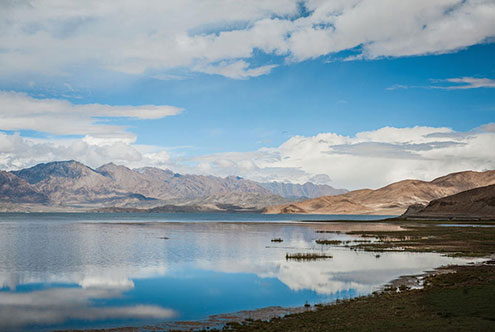
While you're rushing to clock in at the last minute every day, the sunrise over Pangong Tso is just beginning to awaken the slumbering land beneath its feet; while you're arguing in meetings, the centuries-old Guge murals in the caves are just being discovered by the world… These are places you can't reach in high heels, scenes you'll never encounter from an office building. This is Tibet, a place that fills every dream-chasing poet with ecstasy.
1. Taking the train to Tibet is more affordable and safer. Although it is not as convenient as flying, it is relatively comfortable and the price is reasonable.
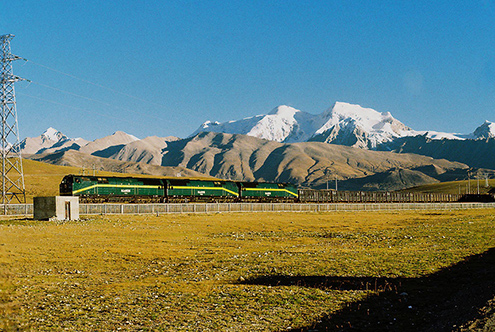
2. Taking the train to Tibet offers beautiful scenery along the way, with fields, lakes, grasslands, snow-capped mountains... one beautiful picture after another will make you forget the fatigue of the journey.
3. Especially for those traveling to Tibet for the first time, taking the train can help you gradually adapt to the high-altitude environment, making your future journey easier and more enjoyable.
3. Taking the train to Tibet can help you meet more fellow travelers. While chatting on the train, you might find like-minded friends, which is another meaning of travel.
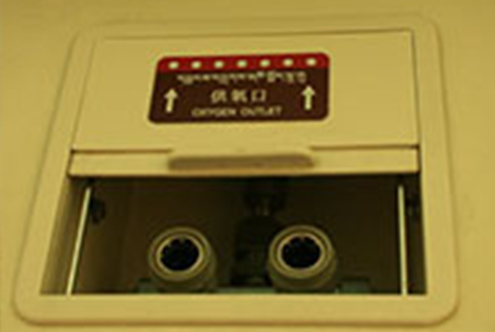
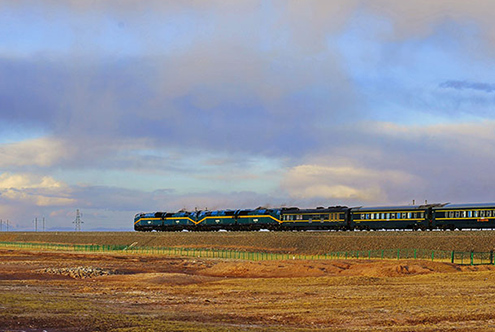 Qinghai-Tibet RailwayI. As a specialized high-altitude train, the Qinghai-Tibet Railway is equipped with oxygen supply systems for passengers. Trains operating on the Qinghai-Tibet Railway all have independent oxygen-generating devices that produce oxygen-rich air and supply it to passengers in two ways:
One method is to supply oxygen into the vehicle via air conditioning (diffuse oxygen) to increase the oxygen concentration inside the vehicle and meet the needs of passengers to replenish oxygen at high altitudes.
Another option is to provide oxygen via distributed oxygen supply lines to the emergency oxygen vents in the seats (berths). If you feel unwell while traveling, you can ask the train attendant for a tube to breathe oxygen. The oxygen concentration of this oxygen-enriched air is generally 40-50 ppm.
Precautions:
1. On the Qinghai-Tibet Railway, the trains between Golmud and Lhasa are equipped with oxygen throughout, and the trains are fully enclosed, just like high-speed trains, and smoking is not allowed.
2. Generally speaking, there are fewer people in the sleeper car and the oxygen concentration is higher, while the hard seat consumes more oxygen. It is recommended that first-time passengers choose the sleeper car.
3. In addition to oxygen supply equipment, the train also has dedicated medical personnel. If you feel unwell, just tell the train attendant and a doctor will come. So you can rest assured.
II. Table of elevation changes along the Qinghai-Tibet Railway:
(1) Most people experience varying degrees of altitude sickness when they first arrive at high altitudes. There is no pattern to what kind of people will get altitude sickness. The best way to avoid or reduce altitude sickness is to maintain a good attitude. Many symptoms are psychological or caused by psychological factors.
(2) On the train, do not walk quickly, run, or do physical labor. Do not overeat or drink excessively to avoid burdening your digestive system. Do not drink alcohol or smoke. Eat plenty of vegetables and fruits rich in vitamins, drink enough water, keep warm, and cover yourself well with a quilt at night to avoid catching a cold.
(3) Some medications can be taken to prevent and relieve altitude sickness: Gaoyuan'an (take at least 1-2 days in advance, and continue to take for 3-5 days after arriving at the plateau), American ginseng lozenges, Nodikang capsules (very useful for relieving extreme fatigue), Panadol (to control headaches caused by altitude sickness), American ginseng (very useful for relieving extreme fatigue), Su Xiao Jiu Xin Wan (do not take too much), Danshen Wan (to treat cardiovascular diseases), glucose solution, etc. For people with strong altitude adaptability, the symptoms of altitude sickness can usually be eliminated within 1-3 days, while those with weak adaptability need 3-7 days.
(4) You can take some vitamin C.