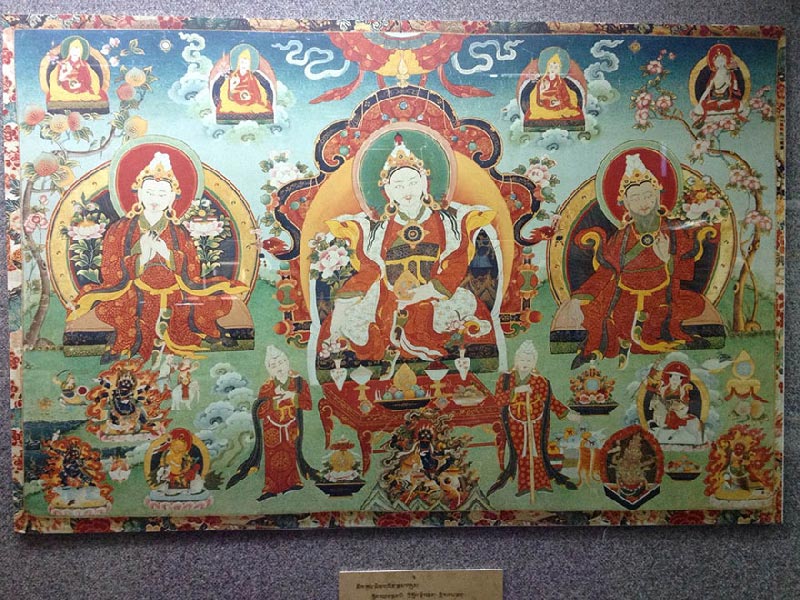
The Tibet Tubo Museum, located on the site of the former Tubo Royal Palace and covering an area of 12,000 square meters, will officially open to tourists in May 2016.
The Tubo Museum, located in Qonggyai County, Shannan Prefecture, represents a total investment of 30 million yuan. It comprises two restored architectural complexes: the Qonggyai Dzong and the Riwu Deqin Temple, spaced 500 meters apart. The Qonggyai Dzong complex will primarily showcase the early Tubo natural environment and tribal society, the political and tribal systems before Tubo unification, the establishment of the Tubo Kingdom, and the achievements of successive Tubo emperors. The Riwu Deqin Temple complex will mainly cover the socio-economic conditions, ethnic customs, and culture of the Tubo period.
The Tubo Dynasty was the first regime in Tibetan history with clear historical records. It ended the fragmented and isolated development of various Tibetan tribes at the time, and achieved the integration and expansion of the Qinghai-Tibet Plateau culture. Qonggyai, the former capital of the Tubo Dynasty, not only boasts the famous Tibetan royal tombs, but also cultural relics such as the Qingwa Dazi Palace, Riwu Deqin Monastery, and the former residence of the Fifth Dalai Lama. According to Dawa, Chairman of Tibet Culture and Tourism (Group) Co., Ltd., the tourist area, while preserving its original appearance, will showcase the various periods of the Tubo Dynasty through artifact displays, scene recreations, and interactive technology.