- What are the filming locations for "Touhou Project"?
- Pudacuo: The Forest Where Qin Fang Falls and Si Teng Awakens
- Napa Lake and Dukezong: The "Dana" in the drama comes from multiple Shangri-La scenes.
- Dali: Cangcheng Mountain, lakeside residences, and Xingyun Pavilion are scattered throughout the city.
- Xishuangbanna: The scenery of Black Back Mountain and the rainforest cannot be condensed into a single cave.
- Seven-day binge-watching itinerary
- Four things to confirm before departure
- Reference source
- Related FAQs

In the forests of Pudacuo, tree roots stretch across the wetlands, and a thin mist slowly drifts into the woods from the direction of Shudu Lake. Much of the fantastical atmosphere surrounding Qin Fang's fall and Si Teng's awakening comes from this highland forest itself. The production team didn't confine all the scenes to a studio; instead, they searched along the Yunnan coast for real spaces where vines, trees, lakes, and ancient cities could coexist.
The names "Dana," "Cangcheng Mountain," and "Yunxi Village" in the TV series "Si Teng" are place names in the story. The actual filming locations spanned Shangri-La, Dali, and Xishuangbanna, with some Republican-era and indoor scenes also completed in Wuxi and Hengdian. The three filming locations in Yunnan are hundreds of kilometers apart, making it suitable for a segmented trip rather than a single weekend trip.
“The main visuals for "Dana" are from Shangri-La. The scenes of "Cangcheng Mountain" and Qin Fang's life are concentrated in Dali. The rainforest and Black Back Mountain related exterior scenes are from Xishuangbanna, while the cave and Republican-era scenes were filmed in studios and in other provinces.
What are the filming locations for "Touhou Project"?
| Space in the play | Main real locations | Representative image | Suggested to stay |
|---|---|---|---|
| Dana and Sito's Awakening Place | Pudacuo National Park, Napa Lake, and Dukezong Ancient Town in Shangri-La | Forests, lakes, plateau highways, and Tibetan-style ancient towns | 2 to 3 days |
| Cangcheng Mountain, Qin Fang's living place | Dali Old Town, Erhai Lake, Xingsheng Bridge, Longwei Pass, etc. | Bai ethnic courtyards, lakeside residences, bridges, and city streetscapes | 2nd |
| Exterior views of Yunxi Village and Heibei Mountain | Xishuangbanna Rainforest and Villages | Tropical plants, vines, and cave exteriors | 2nd |
| Shito's backstory and some interior design | Wuxi, Hengdian and set construction | Republican-era architecture, cave interiors, etc. | Not included in the main Yunnan route |
The "dozens of camera angles for Touyasha" commonly found online mix confirmed filming locations, nearby attractions, accommodation providers, and speculative locations. This article only includes locations with clearer evidence and independent travel value in the main itinerary.
Pudacuo: The Forest Where Qin Fang Falls and Si Teng Awakens
Interviews with the producers and art team of "Si Teng" revealed that when the crew scouted locations at Pudacuo National Park, they were captivated by the plants, tree roots, and the state of the forest, ultimately choosing this location for the crucial scene where Qin Fang and Si Teng first meet. The primeval forest, lakes, and alpine meadows provided the environment necessary for the fantasy story and reduced the artificiality of the studio sets.
Upon entering Pudacuo National Park, visitors should follow the designated open routes for the day and then proceed on foot. The national park adjusts the areas open to visitors based on ecological conservation, weather, and maintenance conditions; therefore, a particular section of forest depicted in the film may not be precisely located or freely accessible. Rather than delving into the forest to find the same tree, a more practical approach is to observe the changes between Shudu Lake, forests, and meadows along the open trails.
Shangri-La is at a high altitude, so it's not advisable to immediately embark on long, fast-paced hikes upon arrival from lower altitudes. A visit to Pudacuo National Park typically takes up most of the day, so warm clothing, rain gear, and sunscreen are essential. Transportation and itineraries within the scenic area may be subject to change; please check with local Shangri-La information providers.Information on direct shuttle buses to scenic spotsPlease confirm the latest schedule.
Napa Lake and Dukezong: The "Dana" in the drama comes from multiple Shangri-La scenes.

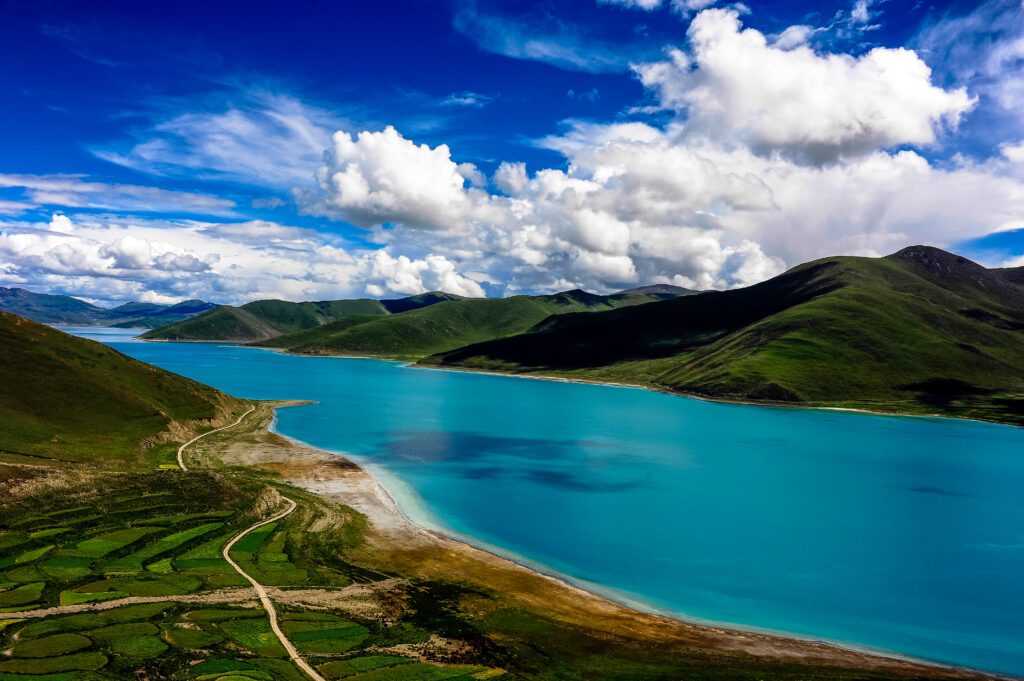
The first episode's scenes of highways, grasslands, and lakes made many viewers remember "Dana." There is no real city in Yunnan called Dana; its main visual elements are composed of various landscapes in Shangri-La, with Napa Lake serving as a part of the high-altitude lake, wetland, and pasture road.
Napa Lake's waters change with the rainy and dry seasons. At higher water levels, it resembles a lake, while at lower levels, large meadows are exposed. Therefore, the same road may look completely different in different months. The lakeside road also serves villages, pastures, and daily traffic; slow down when encountering cattle, sheep, or local vehicles, and avoid prolonged parking on narrow shoulders.
Dukezong Ancient Town offers Tibetan-style streets, courtyards, and an ancient town atmosphere. The lights at Guishan Park and Moonlight Square are particularly dramatic at night, while daytime strolls along the alleyways are ideal. Note that guesthouses and shops in the ancient town may change names or owners; check recent listings before booking and don't rely solely on 2021's photo albums to find the same establishment.
Dali: Cangcheng Mountain, lakeside residences, and Xingyun Pavilion are scattered throughout the city.
The "Cangcheng Mountain" in the drama mainly utilizes the Dali Ancient City and its surrounding space. Bai ethnic courtyards, the outline of Cangcheng Mountain, and the surface of Erhai Lake together create a sense of life after Si Teng and Qin Fang stay there. The film and television route launched by Dali authorities in 2025 also listed Dali Ancient City, the Three Pagodas of Chongsheng Temple, Xiaoputuo, and Xingsheng Bridge as filming locations for "Si Teng".
Xingsheng Bridge is a good spot to see the light at the confluence of the city and the Erhai River, while the Three Pagodas of Chongsheng Temple and Dali Old Town offer more consistent travel options. Specific accommodations listed online, such as Zhongheju and Guipu Seaview B&B, were related to filming of TV dramas, but the names, opening hours, and reception methods of these establishments may change. It's best to make reservations after confirming their operation and not treat them as public attractions open to the public at any time.
The exterior shots of Xingyun Pavilion are often pointed to the Longwei Pass area in Dali. This area retains many old streets and traditional buildings, with smaller spatial scales, and residents' daily lives continue. When shooting doors, windows, and courtyards, avoid private residences and do not enter closed spaces just to watch a TV series.
While Dali and Shangri-La are now connected by rail, it's still important to allow for adjustments based on altitude and post-arrival transportation. Staying two nights in Dali before heading north to Shangri-La usually allows for a more comfortable acclimatization process compared to flying directly to the high plateau. Other film and television locations in Dali can also be visited...Filming Location Guide for "Where the Wind Blows"The arrangement is staggered to avoid repeating the same section of Erhai Lake.
Xishuangbanna: The scenery of Black Back Mountain and the rainforest cannot be condensed into a single cave.
Xishuangbanna was responsible for the more humid and denser vegetation landscape in "Sitō". The art director explained in an interview that the exterior scenes related to Blackback Mountain were filmed in Xishuangbanna, while the scenes after entering the cave were filmed separately in Hengdian. The continuous path that viewers see actually traverses both real rainforest scenery and man-made sets.
This area is best suited for exploring vines, buttress roots, tropical valleys, and village environments. Some online articles label locations like Xishuangbanna Primitive Forest Park and Manbei Old Village as precise camera positions, but publicly available information provides limited correlation between each scene. In the absence of production notices, creator statements, or verifiable on-site markers, these locations should be described as extensions of similar travel itineraries.
Xishuangbanna and Shangri-La have vastly different climates and altitudes. The rainforest is hot and humid, while the highlands are cold in the mornings and evenings. You'll need to pack mosquito repellent, rain gear, and warm clothing in the same suitcase. For more information on entry and regional travel conditions in Xishuangbanna, please refer to the article by Da Wan Jia.Xishuangbanna Travel Policy Summary.
Seven-day binge-watching itinerary
Spend the first two days in Xishuangbanna, choosing an open rainforest scenic area and a village tour, avoiding unverified cave locations. On the third day, head to Dali, allocating most of the day for travel. On the fourth day, visit Dali Old Town, Longwei Pass, and Xingsheng Bridge. On the fifth day, see the Three Pagodas of Chongsheng Temple and the east bank of Erhai Lake, then take the train or bus to Shangri-La.
On the sixth day, we will enter Pudacuo National Park, reserving our energy for the forest and lake trails. On the seventh day, we will visit Napa Lake and Dukezong Ancient Town, deciding whether to add an extra night depending on our return transportation.
With only four days available, Dali and Shangri-La were retained, while Xishuangbanna was removed. The biggest cost between the three locations was travel; minimizing visits to one place was closer to the viewing rhythm of "Sito" than commuting to work early every day.Four things to confirm before departure
The opening routes to Pudacuo National Park, the water level of Napa Lake, the operating status of specific guesthouses, and the regulations for the Xishuangbanna Rainforest Scenic Area on the day may differ from previous travel guides. For information regarding reservations, tickets, and schedules, please refer to the latest announcements from the scenic area and transportation authorities.
There's also the visual contrast: the Yunnan depicted in the drama achieves a unified color palette through costumes, lighting, set design, and post-production, while the real-life route traverses plateaus, ancient cities, and tropical rainforests. Finding every identical camera angle doesn't automatically replicate the atmosphere of the series. Understanding why these locations were chosen is crucial to seeing what the director truly borrowed from Yunnan.
Reference source
- Xinhua News Agency: Filming and Cultural Tourism Promotion of "Si Teng" in Yunnan
- People's Daily Online Yunnan Channel: Dali "Si Teng" Film and Television Tourism Route
- China.com: Filming of "Si Teng" took place in Shangri-La, Dali, and Xishuangbanna.
- Interview with the producer of "Si Teng": Location shooting and location scouting at Pudacuo
- Interview with the art director of "Sithopole": Scene splicing in Dali, Xishuangbanna, Wuxi and Hengdian
- Yunnan Province Film and Television Shooting Service Information: Open Shooting Resources in Various Parts of Yunnan
Related FAQs
Where is Da Na from "Si Teng"?
Where was the filming of "The Forest That Resurrected" filmed?
What filming locations were used for the movie "Si Teng" in Dali?
Was the entire film "Si Teng" shot in Yunnan?
How many days would it take to visit all the filming locations in Yunnan for the TV series "Sithopoo"?